
🌳 Black Walnut Tree Value Calculator
Estimate the potential market value of a standing Black Walnut tree.
Measure the tree’s diameter at about 4.5 feet from the ground. This helps estimate trunk volume.
The usable trunk height in feet, from the stump to where significant branching begins.
The current market price per board foot of Black Walnut lumber. Adjust based on your region.
A multiplier indicating the tree’s quality or grade. Higher grade yields higher potential value.
An approximate measure of the total lumber volume in board feet.
This is the approximate market value of the standing tree, factoring in price, grade, and volume.
Last Updated at: May 22, 2025
Black Walnut Tree Value Calculator

Created by James S. Lockwood
With a background in botany and ecological sciences, James specializes in creating practical tools and resources to help gardeners, farmers, and plant enthusiasts optimize their green spaces.
Black walnut trees are among the most valuable hardwoods in North America. If you’re wondering about your black walnut tree’s value, you’re in the right place. Use our free black walnut tree value calculator to estimate the potential worth based on tree size, age, and quality. This page also explains what affects black walnut tree value in today’s market.
Table of Contents
How the Black Walnut Tree Calculator Works?
This tool helps landowners, loggers, and forestry professionals determine the potential worth of their black walnut trees. The calculator considers:
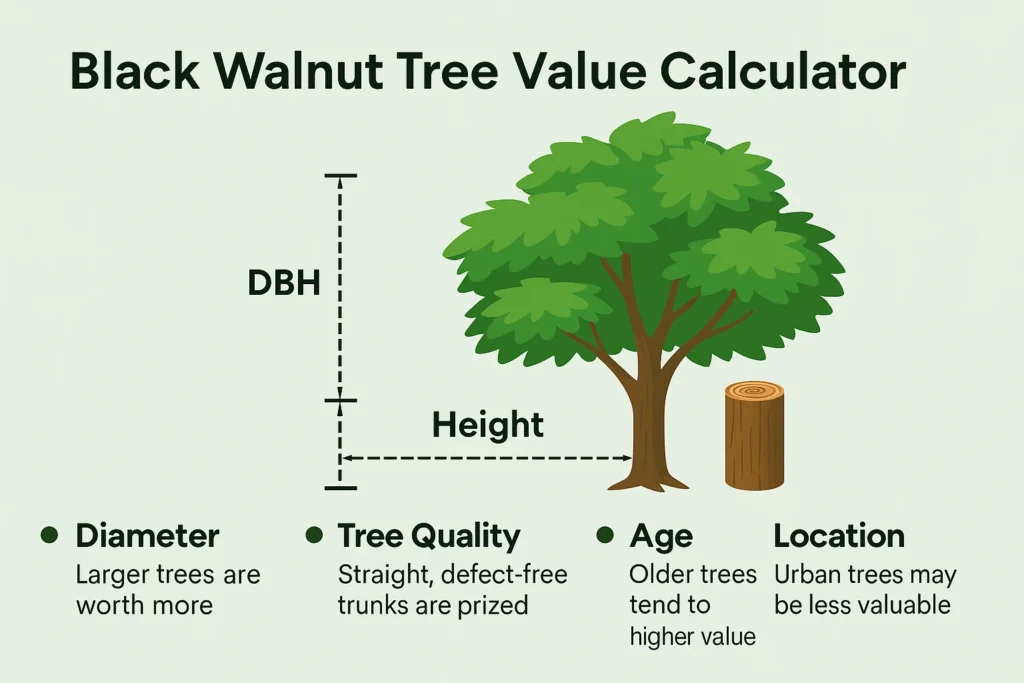
Tree Diameter (DBH): The width of the tree trunk measured at 4.5 feet above the ground.
Merchantable Height: The usable height of the tree for lumber production.
Market Price per Board Foot: The estimated price of walnut wood in your area.
Quality Grade: Higher quality trees (veneer-grade) fetch premium prices compared to common-grade trees.
Planning removal? Estimate your costs using our Tree Removal Cost Calculator.
What Is the Value of a Black Walnut Tree?
The value of a black walnut tree can range from $300 to over $10,000 per tree, depending on a few key factors like diameter, height, trunk quality, location, and market demand. Black walnut is one of the most sought-after hardwoods in the U.S. due to its rich color, durability, and use in furniture, gunstocks, veneers, and fine woodworking.
A tree with a straight, defect-free trunk over 18 inches in diameter and 8 feet or more of clear bole (trunk without limbs) can be especially valuable. Additionally, urban trees may be worth less than forest-grown ones because of potential metal or nail contamination, which makes them risky for mills.
Use our Black Walnut Tree Value Calculator above to get a fast estimate based on your tree’s size and age — whether you’re planning to harvest, sell, or insure your tree.
For a deeper understanding of how timber species like black walnut are valued commercially, refer to the USDA guide on hardwood timber value estimation, which outlines market-grade factors and log quality considerations used by forestry professionals.
What Affects Black Walnut Tree Value?
Several factors influence the price of a black walnut tree, including:
Tree Health & Straightness: Straight, defect-free trunks yield higher quality lumber.
Market Demand: Prices vary based on regional timber demand.
Grade & Species: Veneer-quality logs are more valuable than common-grade lumber.
Size & Age: Larger, older trees generally command higher prices.
For general tree appraisal across species, use our Tree Value Calculator.
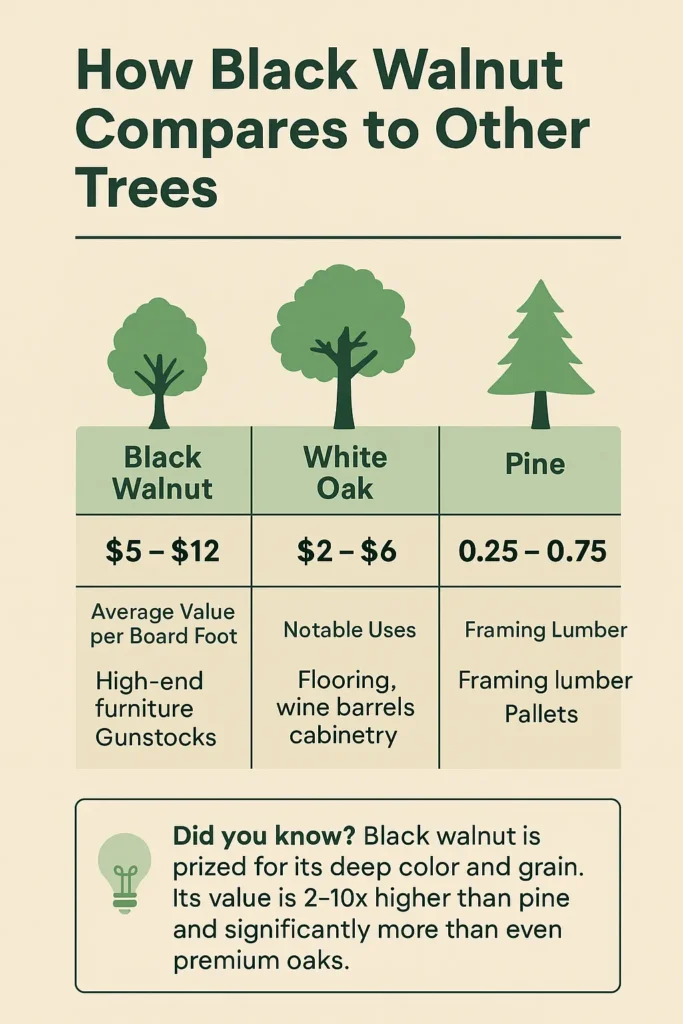
How Black Walnut Compares to Other Trees?
Not all hardwoods are created equal. Here’s how black walnut stacks up against other popular species in terms of board foot value:
Timber vs. Urban Tree Value
The same tree species can have vastly different values depending on its environment:
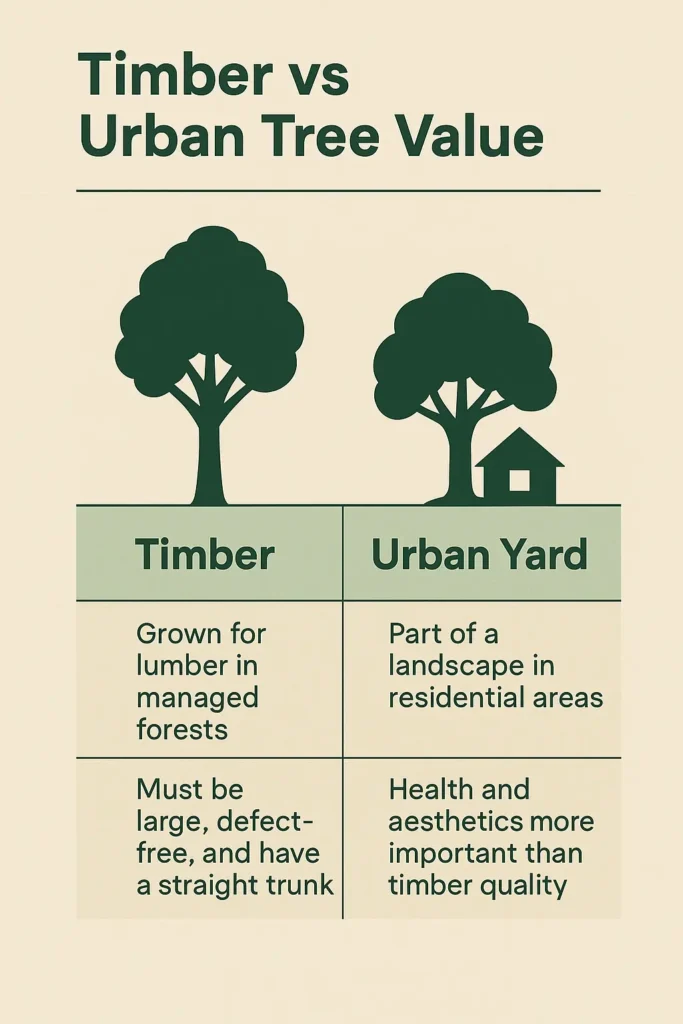
⚠️ Urban trees, even if healthy, may fetch lower prices because of embedded nails, irregular growth, or high removal costs.
Common Pitfalls in Estimating Tree Value
Valuing a black walnut tree isn’t as simple as measuring its trunk. Watch out for these overlooked issues:
Multiple leaders or split trunks lower log grade
Embedded metal (nails, barbed wire) can ruin sawmill blades
Inconsistent diameter or flaring bases reduce usable wood
Low log count: fewer straight 16-ft logs = lower board foot yield
Decay or fungal issues (often hidden inside) can invalidate value estimates
Always consult a local forester or timber buyer to verify tree grade before planning a sale.
Know your tree’s diameter? Calculate it using the DBH Basal Area Calculator.
Top States Where Black Walnut Trees Are Most Valuable
Location affects everything—from growth rate to market demand. These states are hotspots for high-value black walnut:
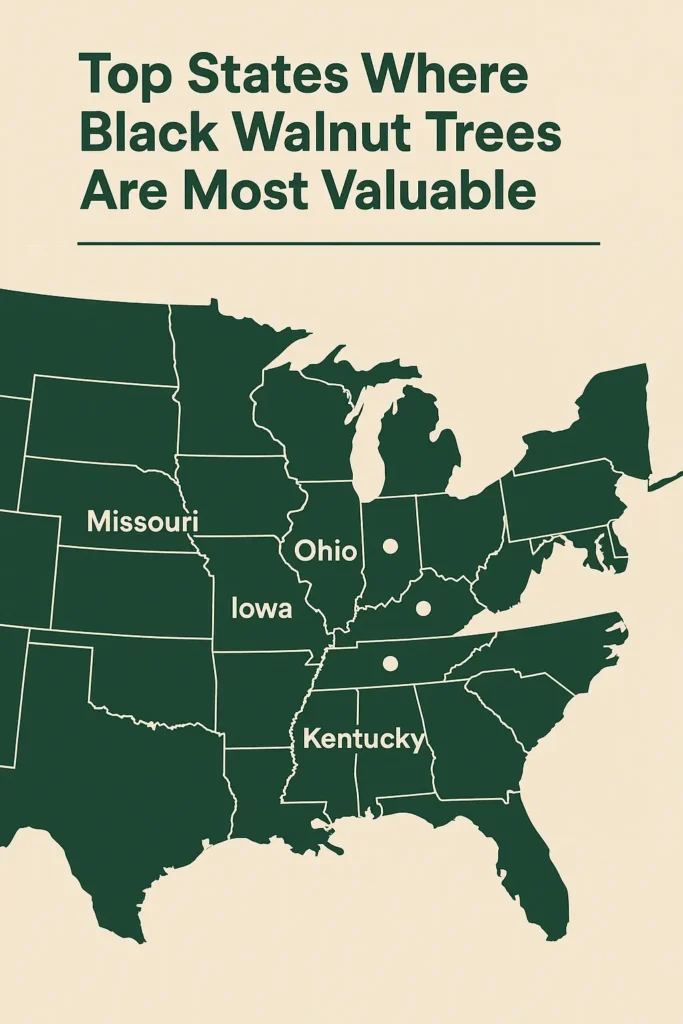
If your tree is growing in one of these regions, you may command a premium price compared to trees elsewhere.
How to Use the Black Walnut Tree Value Calculator?
- Enter the DBH (in inches): Measure the tree trunk’s diameter at 4.5 feet above the ground.
- Enter the Merchantable Height (in feet): Estimate the height of usable lumber.
- Set the Market Price per Board Foot (USD): Use current market prices or default estimates.
- Choose the Tree Grade: Select from Veneer, Prime, #2 Common, or #3 Common.
- Get Instant Estimates: The calculator provides an estimated value based on board footage and quality multipliers.
Why Use Black Walnut Tree Value Calculator?
- Accurate Estimation: Helps determine the potential selling price of a black walnut tree.
- Forestry Planning: Useful for landowners managing timber assets.
- Market Insights: Understand how tree quality and market conditions affect pricing.
FAQs
1. How much is a black walnut tree worth?
The value of a black walnut tree can vary from $300 to over $10,000, depending on factors like the tree’s size, straightness, wood quality, and current market demand. Trees with a large diameter, few knots, and long, clear trunks fetch the highest prices.
2. What makes a black walnut tree valuable?
A black walnut tree’s value is determined by its:
Diameter at breast height (DBH)
Log quality (straightness, defects, branching)
Age and wood grain
Location (forest-grown trees are worth more than urban ones)
Species purity (true Juglans nigra vs. hybrids)
The straighter and cleaner the trunk, the more valuable the tree is for lumber or veneer.
3. Is it worth cutting down a black walnut tree?
It can be — but only if the tree is mature, in good health, and free from major defects. Cutting down a young or low-grade walnut tree may not yield enough return. Always get an appraisal or estimate (like from our calculator) and consider its ecological and landscape value too.
4. Who buys black walnut trees?
Buyers typically include:
Timber and logging companies
Furniture and veneer manufacturers
Sawmills
Woodworking shops
Specialty lumber buyers
You can find buyers locally or list the tree on forestry marketplaces or forums.
Disclaimer
This calculator provides estimates only. Actual prices depend on market fluctuations, buyer negotiations, and local demand. For precise appraisals, consult with a professional forester or timber buyer.
Discover Tree & Forestry Calculators